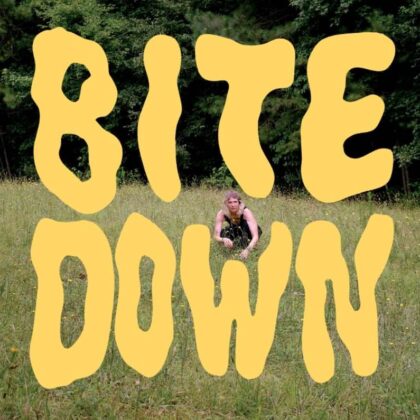
When Frankie Rose revealed Interstellar’s incredibly catchy first single, Know Me,” she tapped in to a familiar place, and I’m not just talking about the ease in which she weaves a tapestry of colors into a fully realized dream-pop single worthy of 4AD comparisons. There’s an intimacy and expansiveness in the song that recalls Lush’s shy stepping-stones; like a cross between “Breeze”, “Sunbathing” and pretty much all of the band’s pre-Spooky material. “Know Me” only hints at what Interstellar has in store for listeners, but I wouldn’t call Rose a tease. This is a girl you take home to meet the family after at least two full-album spins and a full day of running errands for the sake of hanging out with each other, at least that’s what the dream pop kids used to do.

Rose not only treats us to a nostalgic trip, there are layers of vocals smothered across multiple tracks within one song, synths that stretch like taffy but melt like ice cream and sparkling guitar leads that are reminiscent of Will Sergeant’s brilliant picking style and sound. The entire album is magnificent to say the least. Once you come back down to Earth you’ll begin to hear love stories that are tragic and personal. Maybe you’re projecting, but you always get the sense that she already moved on once the pen left the paper’s surface, so you follow her lead. Interstellar is a record that feels so elegant, so physical and so real.

Daylight Sky” and “Gospel/Grace” open with gorgeous guitar leads. The choruses are quick bursts of energy that give you little warning but signify a triumphant and celebratory moment, even though my gut tells me there’s travesty or a process of letting go deeply rooted within the entire album. “Had We Had It” is the sound of being disappointed but still stuck in love as Rose sings, “Could we, we had it all”, then rearranges a few of the words in a repetitive fashion during the chorus. All of a sudden she’s free again.

Layers upon layers of phrases and verses serve as the key ingredient, and are the most resonating feature on certain tracks. They accentuate every guitar line and gentle wash of warm synth, or they become simply overwhelming with harmonies that blur into the overall mix. It’s a gigantic sound that overshadows the instruments at times. This is especially memorable on the more delicate tracks “Pair of Wings”, “Apples for the Sun”, and the angelic closer, “The Fall.” You’ll want these songs to go one forever.

Rare is the album that aligns its moods and soul with a gift for storytelling. But guess what? I found one. words/ s mcdonald

MP3: Frankie Rose :: Gospel/Grace

An audacious choice as a single based on running time alone, the title track from Pulp’s 1998 album made an equally brazen choice for video. This is Hardcore, the album, is more than worthy of a post on its own – a dark, seedy exploration of the very things documented and partly celebrated on their breakthrough Different Class. This is Hardcore is the long, dead-eyed look in the mirror late at night when coming down. It’s an album of jaded, hard reflection and Pulp’s underrated masterpiece.

The title track takes the album’s themes and amplifies them. The narrator, speaking to his sexual partner, expresses his desire to “make a movie” and that they should “star in it together.” But it’s clear that this isn’t about desire, but manipulation, control and objectification as fantasy fulfillment. Our narrator’s ideas of sex clearly are rooted in lessons learned not at the hands of responsible parents or partners, but in front of the flickering, late night videos or computer screens of mainstream pornography. “I’ve seen all the pictures / I’ve studied them forever…that goes in there, and that goes in there, and that goes in there,” Jarvis Cocker repeats in a sing-songy, droning repetition, intimating the listless, mechanical nature of the acts his narrator so craves and desires. “But what exactly can you do for an encore,” he muses at the song’s close. Real life ceases to add up.

The song samples the Peter Thomas Sound Orchestra’s “Bolero On the Moon Rocks,” a piece that sounds like something out of the sexiest (and most X rated) Bond movie never made. It ends up being a musical call-back to the 70s era of ‘classy’ pornography, when porn films were screened to discriminating audiences in real movie theaters. Anyone growing up on a steady diet of this was bound to have an interesting perspective on their own sexuality.

And it’s here that the video explores the song’s themes by taking different visual cues. The whole video is set to resemble the filming process of a noir detective film and we see actors and actresses practicing their lines, stopping and starting on cue, shooting and re-shooting scenes. We see passion and vitality, anger and longing. “But then it’s over,” as Cocker sings. People turn these versions of themselves on and off at will, creating a fantasy for those watching – a commentary itself on the way the audience may turn around and attempt the same. The way our narrator has done just that.

When Cocker (that’s him as the detective, the mod hipster in the party and as the male center of the Rockettes’ style dance piece) finds himself in the midst of a dozen gorgeous but nearly identical and interchangeable women, it’s our narrator at the peak of his imaginary powers – surrounded by everything he’s ever craved, but not realizing that they’ve become nothing but objects. “It’s what men in stained raincoats pay for / but in here, it is pure.” Cocker’s narrator fancies himself above the rabble who would pay for such things – his partner is willing and real. But with the robotic view of the interaction (“I’ve seen this storyline played out so many times before”), is he really any better than those who pay for the thrill? Their objectification is obvious and owned; his is masked and just a touch more sinister. “‘Cause this is hardcore.” words/ j neas

Diversions, a recurring feature on Aquarium Drunkard, catches up with our favorite artists as they wax on subjects other than recording and performing. This week: Roadside Graves’ John Gleason takes on the often misunderstood world of the Bee Gees; a group whose larger catalog and career has long been overshadowed due to their role as pop-culture figurehead of the late seventies Disco movement. Gleason, in his own words, below.
__________________________________________________________________________________

“Townes van Zandt is the best songwriter in the whole world and I’ll stand on Bob Dylan’s coffee table in my cowboy boots and say that.” Steve Earle famously said that.

If I had my way I’d fashion something similar about the Bee Gees and the Beatles but I’m not as quotable as Steve and my intention is not to fill up the comments section with irate Beatles fans. Yet, there have been many parties (actually more like many a bar) in which I have proclaimed sincerely that the Bee Gees are better than the Beatles. In doing so I have begun many passionate and dynamic conversations/arguments with strangers, friends, and bartenders. The truth is that I firmly believe that music can be universally qualified as good or bad by critics and listeners by certain criteria but regardless of the specifics of how you are judging music or how many stars or numbers you deem appropriate all that truly matters is how the listener feels and responds to the music when no one is around. When the headphones are on and the judgements aren’t so severe, when the windows of the car are up, or when you are safe among friends what are you listening to? I would agree with anyone that the Beatles produced both influential and quality music, yet for some reason which I will poorly attempt to explain I instinctively prefer the Bee Gees.

There’s a key moment in Jim White’s fifth and latest LP, Where It Hits You, where the album pushes itself into emotional depths only hinted at in its opening sections. When the marching-band tempo of “Here We Go!” roils to a close, “My Brother’s Keeper” kicks off the back third of the record and for a moment, it’s like the sun has just dipped the last of its circumference below the horizon. Dusk settles in and the darkness chased away in the lead track has returned. Where It Hits You is a dynamic work that finds Jim White at the peak of his lyrical prowess, displaying some of the finest songwriting of his career.

As Jim stated in our interview last week, he wanted to make the album work like a great composition – “[offering] you hope for a moment, and [then] they carry you down.” The somber, piano-tinged moments of opener “Chase the Dark Away” sound like the pre-dawn feeling its way into existence. It’s a classic Jim White song – lyrics that could be mistaken, in some other universe, as joyful and celebratory, but sung in the mournful voice of someone far too wounded to buy into it. And indeed, the first few tracks ease out of the gate with this same feel. “Sunday’s Refrain” and “The Way of Alone” have a careful, hesitant feel to them, as if afraid of rippling the pond and scattering the small bits of happiness. The latter, a song White has had in his repertoire for a year or more, has a protagonist so beaten that they accept kindness from places they wouldn’t always have, but it’s better than going it alone.

Even in the album’s ebullient middle third people are outcasts. Whether it’s feeling like freaks who can still harness the power of the “Infinite Mind,” celebrating (or is it lamenting?) existence in a way that feels and experiences “What Rocks Will Never Know” or finding their way, somewhat backwards, into a “State of Grace,” the more upbeat tracks here are, much as White said, like a joyful center surrounded by the sorrowful realities of life. But in some ways, the narrator’s abilities to dance in the fire makes the album’s closing section that much tougher. “My Brother’s Keeper” is a dark ballad about someone too sensitive for the world, relegated through one key misstep to his bedroom for the remainder of his days. “The Wintered Blue Sky” revisits the earlier theme of going it alone, only this time hinting that hell truly can be other people. “Nobody ever got nowhere alone,” Jim opines late in the song’s distant thunder percussion, more of a dirge about the terrible effects our actions can leave on others rather than a celebration of togetherness.

If there’s a moment of true, harrowing beauty in the album’s closing songs though, it’s the bridge to “Epilogue to a Marriage.” When the two spouses find themselves blown apart at last (sung in a spectacular duet between White and Caroline Herring), the lyrics seem to sigh, singing “and to think, I’d only just reminded myself / heaven’s seldom ever more than just one sucker punch away.” The small shocks of life usually send us toward more of a hell than a heaven, but in White’s world, it seems like the dark injustices are just another gift of enlightenment, no matter how dreadful the outcome. After all, White sings in the closing “Why It’s Cool,” “everything’s a tool / my mistakes are tools / my heartbreaks are tools / and as any old fool can tell you / the worth of a tool is in how you use it.”

Jim White has always been good at ending a record, but Where It Hits You earns its title by saving its biggest body blows for the closing rounds, landing some mighty hard punches that even the melancholic hope of “Why It’s Cool” can’t quite salvage – but that’s probably the point. Where life hits you is somewhere that doesn’t quite break through to the center, but the tremors are felt and remembered – all the way to the end. words/ j neas

MP3: Jim White :: Chase The Dark Away
MP3:
Jim White :: Infinite Mind

Our weekly two hour show on SIRIUS/XMU, channel 35, can now be heard twice, every Friday – Noon EST with an encore broadcast at Midnight EST.

SIRIUS 233: Jean Michel Bernard – Generique Stephane ++ Father John Misty – Hollywood Forever Cemetery Sings ++ Isobel Campbell & Mark Lanegan – Deus Ibi Est ++ Damien Jurado – Nothing Is the News ++ Bodies of Water – Open Rhythms ++ Mission Of Burma – New Disco ++ Guided By Voices – Captain’s Dead ++ The Jesus & Mary Chain – Taste The Floor ++ Joy Division – Day Of The Lords ++ Iggy Pop – Sister Midnight ++ My Bloody Valentine – Loomer ++ Pure X – Twisted Mirror ++ The Cure – Screw ++ Destroyer – Leave Me Alone (New Order) ++ Women – Shaking Hand ++ The Fall – The Classical ++ Deerhunter - Dr. Glass ++ Pavement – Perfume-V ++ Bleached – Dazed ++ The Damned – New Rose ++ Wire – 12xU ++ Johnny Thunders & The Heartbreakers – Born To Lose ++ Cass McCombs – Love Thine Enemy ++ Veronica Falls – Veronica Falls ++ Dunes – Tied Together ++ Atlas Sound – Amplifiers ++ The Art Museums – So Your Baby Doesn’t Love You Anymore ++ Trailer Trash Tracys – Candy Girl ++ Frankie Rose – Know Me ++ Crystal Stilts – Shake The Shackles ++ White Hinterland – Requiem Pour Un Con ++ Moon Duo – Stumbling 22nd St ++ Pink Mountaintops – Cold Criminals ++ Talking Heads – Psycho Killer ++ Kindness – Swinging Party ++ Allah-Las – Long Journey

*You can listen, for free, online with the SIRIUS three day trial — just submit an email address and they will send you a password.
__________________________________________________________________________________

Nearly five years is a long time to wait, but it’s been that long since Jim White’s last official LP. Though he released a live EP and a soundtrack for a play in the meantime, it’s been a tumultuous span of time – White left Luaka Bop, the  label that had been his home since his auspicious 1997 debut and, in the middle of recording his latest, separated from his wife. Thankfully Yep Roc Records is releasing White’s fifth LP, Where It Hits You, on February 21st. AD sat down with Jim at the Yep Roc offices in Haw River, North Carolina to talk about leaving Luaka Bop, landing on Yep Roc, prescient song writing, the financial hazards of touring and why raking leaves in England would have been a good thing.

Aquarium Drunkard: You’re on Yep Roc Records now – this is your first record for a label other than Luaka Bop, the label you’ve been on since the beginning. How did you end up on Yep Roc and why leave Luaka Bop?

Jim White: Luaka Bop sort of, quote unquote, discovered me. I was sort of a mentally ill cab driver in New York City writing songs about life in the South. No one was interested. No label was interested. And they said, ‘yes, we want to make a record with you.’ It was very puzzling at the time. So I feel a great sense of love and gratitude toward them. We made four records and a bunch of other little things together. The music industry has collapsed and as the industry has collapsed, the ability for labels to stay in business has become more and more dire. When they offered me the budget for this record, it was a very small amount of money. What they’re basically saying is ‘there isn’t enough money in the music business for you to make a living and us to make a living, so we’re going to trim it back to nothing.’ And they would own the whole record if I made it with them. It was a really hard decision to make because I love those people and I really care about them and I feel such gratitude, but I couldn’t starve my family to stay there at the label.

So I went off on my own and I made this record on my own dime. Yep Roc didn’t fund the record – we came to them after the fact. And I ran out of money mid-way through making the record and I did a Kickstarter campaign. And people all over the world pitched in and helped me finish the record. It wouldn’t have gotten done. I would’ve lost my house if they hadn’t pitched in what they did. When the record was done, we loved working with Redeye Distribution [located in the same building as Yep Roc] who distributes Luaka Bop. So my manager went to Yep Roc and they were open arms. In some ways, at this point in my career, it’s a better fit. When I first started, it was kind of an anomaly that this guy singing songs about life in the South was on this world music label, so it got a lot of attention because of that. But after awhile, the fan base they cater to isn’t that much interested in what I do, I don’t think. So hopefully this will be a good fit. They deal with a lot of American singer-songwriter type people like John Doe and Nick Lowe and other people whose names end in ‘o.’ [laughs] So hopefully it will be a good fit. So far everything’s been great – a lot of enthusiasm and a lot of encouragement.

Last June Bodies of Water quietly self-released Twist Again – their most mature and, at times, subdued album to date. Autumnal in both tone and presence, the set was the first release following the exit of founding members Kyle Gladden and Jessie Conklin, leaving husband and wife David and Meredith Metcalf to their own devices. This reconfiguration of Bodies of Water’ internal chemistry streamlined their sound and in turn freed it from the very ‘of the moment’ anthemic sonics of their 2007 debut, Ears Will Pop & Eyes Will Blink, and its immediate follow-up. This is a good thing. While there is nothing wrong with being a part of a zeitgeist, Twist Again, compared to its predecessors, immediately gives the impression of staying power. While the album seamlessly incorporates all manner of influences, its twelve songs largely, and thankfully, feel devoid any hyper-specific time or place.

Recorded at their home studio in Los Angeles, Twist Again’s fourth track, “Open Rhythms,” rolls out languid and slow. Textured and haunting, Meredith’s vocals are cool – not icy, inhabiting a space similar to that of Christine McVie at her most reserved. Gone is the early bombast of the past decade, and in it’s place – nuance.

MP3: Bodies of Water :: Open Rhythms

Final artist lineup for our day party. Our (unofficial) fiesta is happening Thursday March 15th at Hype Hotel – 504 Trinity Street. Free booze. Stay tuned for RSVP details. Artist lineup, below. See you in Texas.

Lineup: Lee Fields & The Expressions ++ Bleached  ++ Alabama Shakes ++  Youth Lagoon ++ Bass Drum of Death ++ Nick Waterhouse & the Tarots ++ Father John Misty ++ Futurebirds ++ The Orwells.

Like Gilberto Gil, Gal Costa and Caetano Veloso before him, Arthur Verocai and his auspicious 1972 debut transcend borders, time and genre. An album full of ‘moments’ – “Na Boca Do Sol” and “Caboclo” immediately come to mind – it’s “Sylvia” I have lined up for an upcoming project. In terms of sonic balance the track is masterful. Cascading, ”Sylvia” deftly incorporates folk, jazz and ornate orchestration into its three minute frame. And in doing so it takes the listener along with it.

MP3: Arthur Verocai :: Sylvia